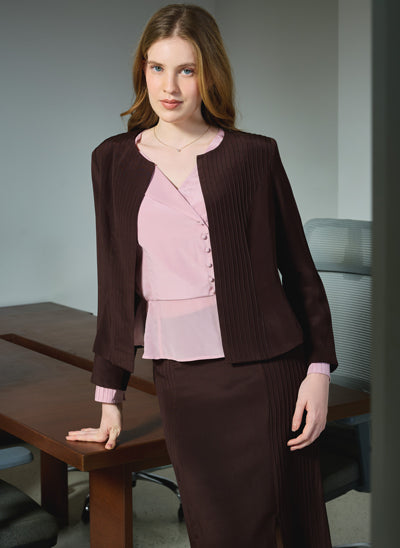
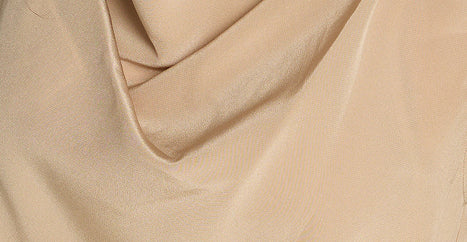
Silk is a natural protein fiber, and it behaves like one. It breathes, draws moisture away from the skin, and helps regulate temperature, keeping you cool through a long, warm day and adding a light layer of warmth when the air conditioning is set too low.
Why Silk?
Silkis not the easiest choice we could have made. There are countless alternatives: fabrics that are cheaper, easier to produce, and simpler to care for, and fabrics that do not raise the ethical questions silk does. Yet, time and again, we find ourselves returning to it. Partly because of how it feels, partly because of how it wears, but mostly because of what it represents.
At a time when so much of fashion is designed to be consumed quickly and replaced often, silk reminds us of a different relationship with clothing. One that values craftsmanship over convenience and longevity over excess. That may sound old-fashioned, but perhaps that is exactly what appeals to us.
How It Feels, How It Wears
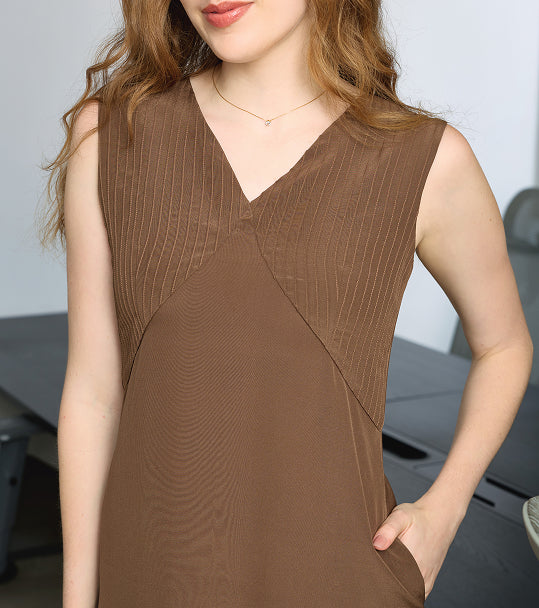
it drapes rather than clings, so a well-cut silk piece looks as composed at the end of the day as it did at the start. It is also lighter than it looks. A silk blouse folds small and packs easily, moving from an early meeting to a long flight to dinner without fuss. For a woman whose day rarely stays in one place, that matters.
Giving Silk Shape
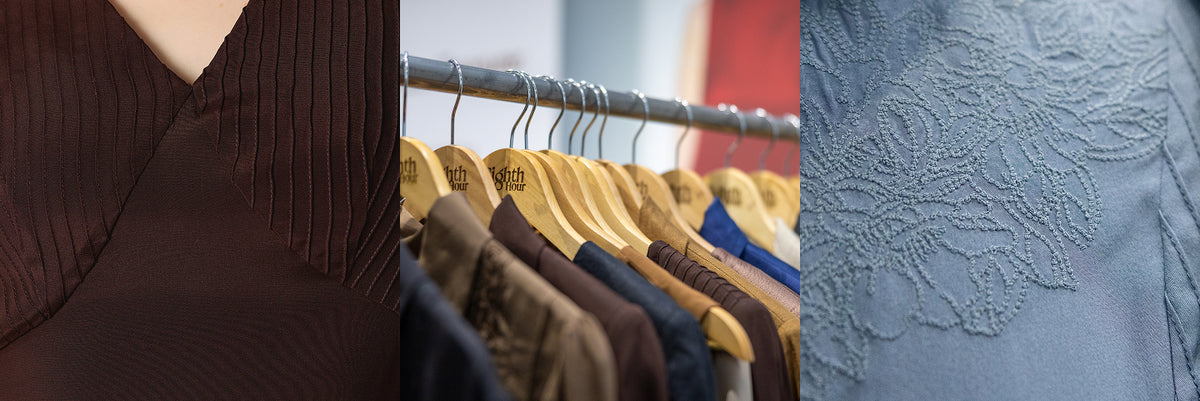
Silk's natural fluid drape is its greatest gift—and its biggest design challenge. Without structure, it simply falls. Our collection explores how thoughtful tailoring gives silk form without losing its freedom.
Pintucks
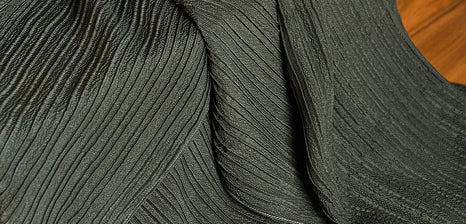
Narrow folds of fabric secured with fine stitching. Placed together, they add controlled fullness, texture, and a little substance, so the silk falls in fine ridges rather than as one flat surface and holds a more defined shape.


Stitch lines
Closely placed stitch lines define the direction of a panel, keep details in place, and help a garment retain its intended shape without adding bulk.

Built to Last
One of the questions we ask whenever we evaluate a material is surprisingly simple: will this still be worn ten years from now? It matters because sustainability is not just about how something is made. It is also about how long it remains useful. Many garments today are made with a short life expectancy. They lose their shape, wear thin, or are replaced long before they need to be. The cycle has become so common that we rarely stop to question it.
Silk encourages a different mindset. Despite its delicate appearance, it is one of the strongest natural fibers for its weight. Looked after well, a silk piece can be worn for decades. It often becomes one of the most treasured things in your wardrobe, and one you can pass on to your family and children. Not because it is precious, but because it lasts.
Silk is also a natural fiber. It is not made from petroleum, and it does not shed the plastic microfibers that synthetic fabrics release with every wash.
For us, sustainability is not a single statistic or certification. It is the sum of many considerations: what a material is made from, how long it lasts, how easily it can be cared for and repaired, and how often it is reached for. The longer a garment is loved and worn, the fewer replacements it needs.
Caring for Silk
We know silk and easy care are not words you often hear together. In practice, silk asks for a little attention rather than a lot of effort.
Many of our silk pieces can be hand-washed in cool water with a mild detergent, dried away from direct sunlight, and refreshed with a steamer.
Treated this way, silk keeps its color and drape for years. Every piece comes with its own care instructions, so always check the label first.
An Honest Conversation About Silk
We would not be honest if we pretended silk came without complexity.
Most of the world’s silk is mulberry silk, made by steaming or boiling the cocoon with the pupa still inside so that the thread can be unwound in one long, unbroken strand. For many people, that is reason enough to avoid silk altogether, and we understand why.
When we first looked closely at this, we realized there were no perfect answers. We weighed the alternatives as carefully as we weighed silk, and found that every fabric involves trade-offs of its own. What mattered to us was being willing to face those trade-offs openly rather than look away from them. The mulberry silk in our current collection is sourced from different parts of Asia.
We also believe the conversation about silk should include not only how it is produced, but how long it is used. A blouse worn for a decade tells a very different story from one replaced every season.
Exploring Eri Silk
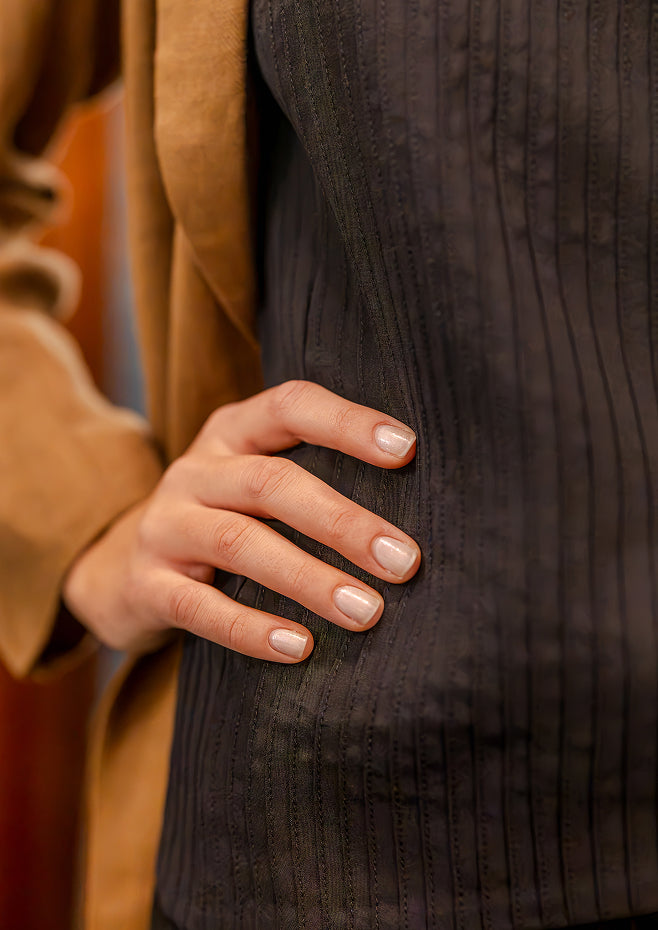
Along the way, we have become increasingly interested in Eri silk. Often called peace silk, Eri is traditionally produced in northeast India, and the cocoon is used only after the moth has emerged on its own. Because the moth breaks the cocoon as it leaves, the fiber cannot be unwound in one long strand. Instead, it is spun, much like wool or cotton.
That process gives Eri its character. Its texture is soft and slightly matte, with a natural beauty quite different from the sheen of conventional silk. We are still learning about this fiber, including how it wears over time.
We see Eri silk not as a destination, but as part of an ongoing exploration into how beautiful textiles can be made with greater thoughtfulness and care.
Why We Continue to Choose Silk
In the end, our decision to work with silk comes down to a belief that has guided us from the beginning. The most meaningful things in our lives are rarely the disposable ones. They are the things we return to, the things we care for, the things that stay useful long after their novelty has faded. For us, silk belongs in that category. Not because it is luxurious, and not because it is traditional, but because,
in a world that keeps encouraging us to buy more, silk reminds us to value what we already have. That feels like a story worth telling.
EXPLORE THE PIECES